You are not looking for bags. You are looking for a factory that will still answer the phone in week six of a rush order.
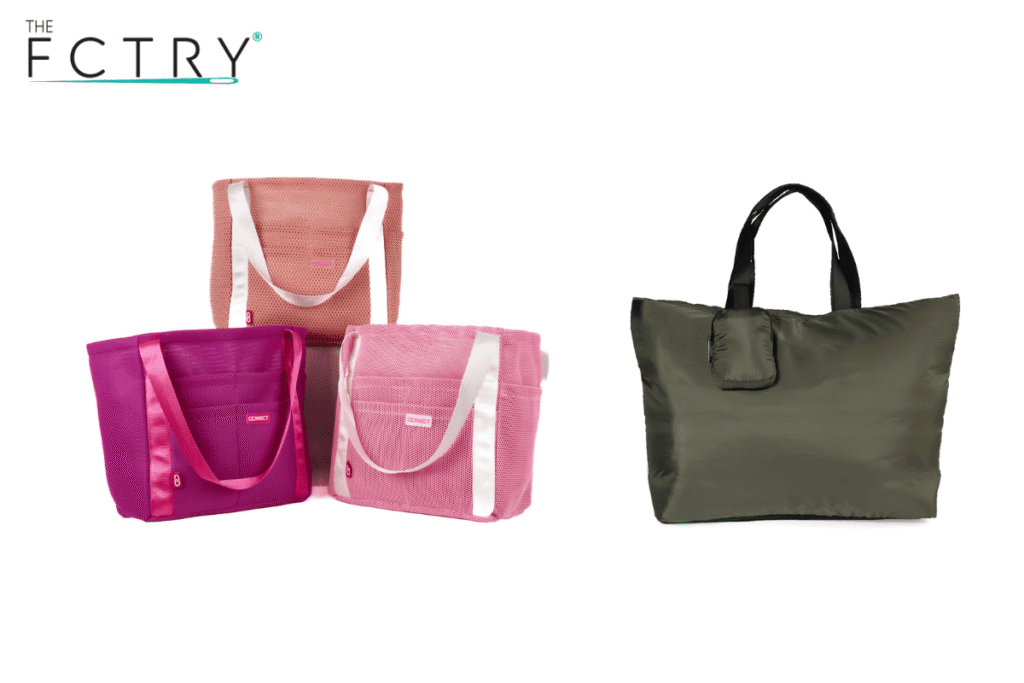
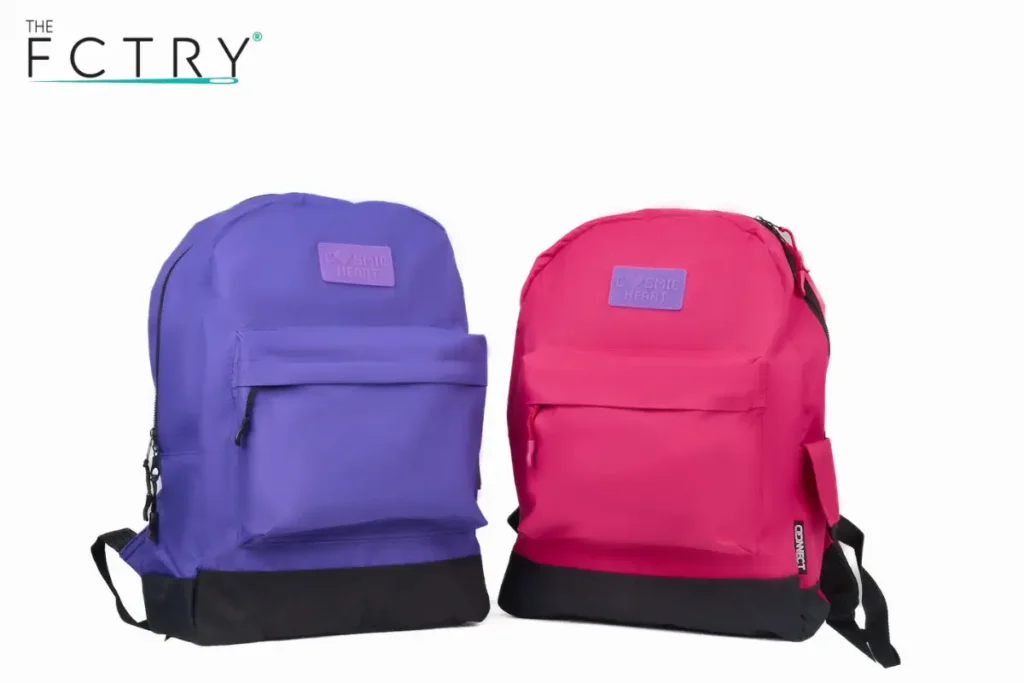
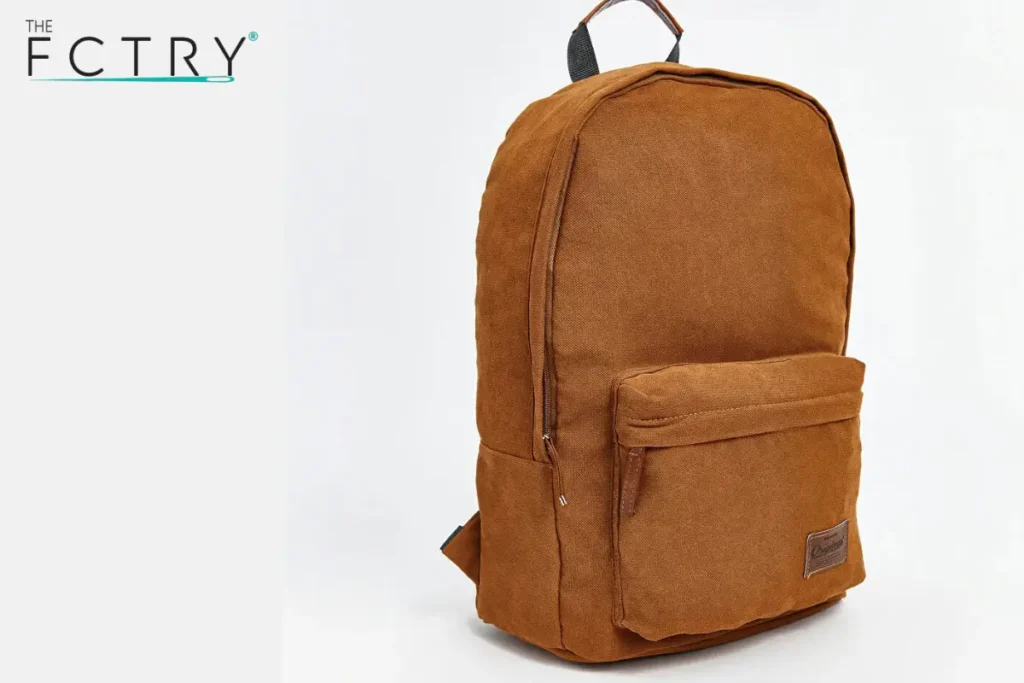
The FCTRY is a B2B bag manufacturing facility in Alexandria, producing school bags, backpacks, and custom carry goods under your own brand.
Your label. Our production floor. Egyptian lead times measured in weeks, not months.
Private Label Bag Manufacturer in Egypt
Every wholesaler in Egypt has lived the same three stories, and usually more than once.
The container that arrives four weeks after the school term has already started. The sample that looked perfect and the bulk run that did not.
And the supplier who quoted a price per unit, then discovered a dozen reasons to revise it upward.
These are not bad-luck stories. They are the predictable result of sourcing from a bag factory you cannot visit, in a language you do not negotiate in, across a shipping lane you do not control.
- Lead times that collapse your back-to-school season before it begins.
- Quality drift between the approved sample and the production run.
- Hidden costs at customs, clearance, and inland transport.
- Minimum order quantities that force you to gamble capital on a single design.
- No recourse when a defect rate turns up in the third carton.
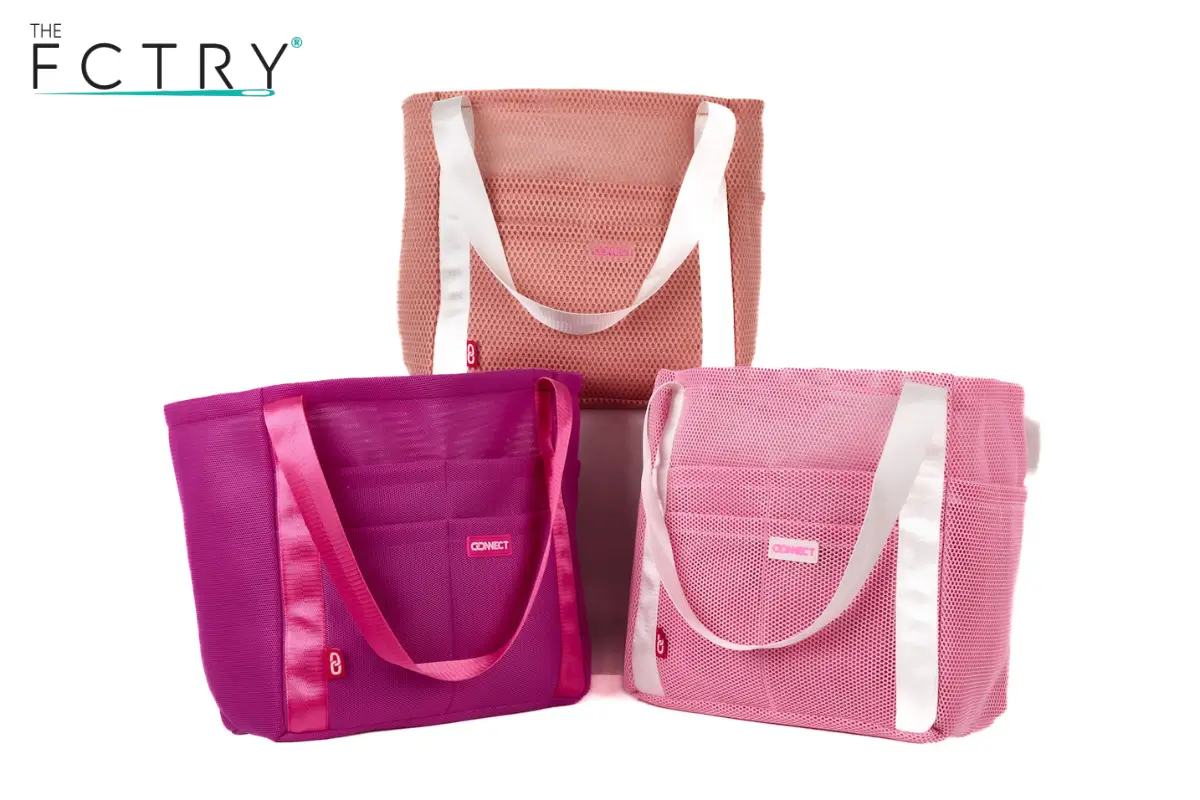
Why Egypt Became a Serious Private Label Bag Sourcing Base
For two decades the default answer to “where do I manufacture bags” was the Far East. That answer has quietly stopped being obvious.
Egypt now offers a combination that is difficult to find elsewhere: industrial textile capacity, competitive labor costs, and geographic proximity to both European and Gulf markets.
For an Egyptian distributor, the arithmetic is even simpler. Domestic production removes import duty, currency exposure on foreign payment, and 35 to 45 days of ocean freight.
Alexandria adds a further layer. The city sits on the country’s primary port, inside a long-established textile and light-manufacturing corridor that includes the Borg El Arab industrial zone.
The Proximity Advantage
- Sample approval in days, because you can hold the prototype in your hand rather than photograph it.
- Factory visits that take an afternoon, not an international flight and a visa.
- Payment in Egyptian pounds, removing foreign exchange risk from your unit cost.
- No import duty, no customs clearance delay, no demurrage charges at port.
- Reorders inside four weeks, which makes mid-season restocking commercially realistic.
- Direct access to Alexandria Port for export orders heading to the Gulf, Libya, Sudan, and Europe.
Private Label, White Label, OEM, ODM Bag Manufacuter
These four terms are used interchangeably across the industry, and that vagueness costs buyers money.
Knowing which model you are purchasing determines who owns the design, what you can legally claim, and how defensible your product is against a competitor.
Bag Manufacturing Models
| Model | Who Designs It | Who Owns the Design | Best For |
| Private Label | The factory designs; you specify materials, colours, and details | Shared — your brand is exclusive to you | Distributors who want a branded range quickly and affordably |
| White Label | The factory designs; you add a logo only | The factory — the same bag may be sold to others | Fast market entry and promotional volume orders |
| OEM | You supply the full tech pack and design | You, entirely and exclusively | Established brands protecting a signature product |
| ODM | The factory designs and you select from its catalogue | The factory | Buyers testing a new category before investing in tooling |
The FCTRY operates across all four models. Most Egyptian clients begin with private label, then move to full OEM once a design proves itself in the market.
How an Order Moves Through the Alexandria Floor
Transparency is the cheapest form of trust a manufacturer can offer. Here is exactly what happens between your first enquiry and your loaded pallet.
Stage 1 — Brief and Tech Pack
You arrive with a sketch, a competitor sample, a photograph, or a full specification. Any of these is a valid starting point.
Our technical team converts it into a tech pack: dimensions, bill of materials, hardware schedule, stitch detail, and branding placement.
Stage 2 — Pattern Making and First Article Sample
Patterns are cut and a first article sample is produced in our sampling room, typically within seven to ten working days.
You receive the physical bag. Nothing enters production until you have handled it, stress-tested it, and signed it off in writing.
Stage 3 — Material Sourcing and Cutting
Approved fabrics and hardware are sourced, inspected on arrival, and released to the cutting tables.
Cutting accuracy is where most quality failures originate, so every batch is measured against the master pattern before it moves forward.
Stage 4 — Stitching Lines and In-Line Inspection
Production runs on dedicated stitching lines, with operators assigned to specific components rather than whole bags.
In-line inspectors check stitch density, bar-tack placement, and strap anchoring while the run is still correctable.
BLOCK 24 · Heading Widget — H3
Stage 5 — Branding Application
BLOCK 25 · Text Editor Widget
Logos are applied by embroidery, silk screen, sublimation, heat transfer, woven label, or moulded rubber patch.
The method is chosen to suit the fabric and the durability expectation, not simply the lowest cost.
Stage 6 — Final Quality Control and Packing
Finished bags pass an AQL-based sampling inspection covering stitching, zippers, symmetry, cleanliness, and printed branding.
Approved goods are polybagged, cartoned, labelled, and staged for collection or export documentation.
School Bag Manufacturing: Egypt’s Highest-Volume Category
School bags are the backbone of the Egyptian bag market, and they are the least forgiving product to manufacture.
A school bag carries eight kilograms of books, five days a week, on the shoulders of a child, for an entire academic year.
Every weakness in the design shows up by December. That is why we specify school bags more tightly than any other category.
Ergonomic and Safety Specifications
- S-curve padded shoulder straps with EVA foam to distribute load across the shoulder rather than the neck.
- Ventilated padded back panel with mesh lining, essential in Egyptian classroom temperatures.
- Adjustable sternum strap to prevent straps sliding outward on smaller frames.
- Bar-tack reinforcement at all four strap anchor points, the single most common failure zone.
- Reinforced base panel, often with PVC backing, for bags placed on tiled and concrete floors daily.
- Reflective piping or strips for children walking to school in low morning light.
- Non-toxic, phthalate-free coatings and dyes as standard on all children’s products.
The Back-to-School Production Calendar
Egyptian retail demand for school bags manufacturing concentrates into a short, brutal window between July and late September.
Wholesalers who begin sourcing in June are already too late for a custom private label range.
| Month | What Should Be Happening | Risk If You Are Late |
| January – February | Design brief, tech pack, material selection | Compressed sampling window |
| March | First article sampling and approval | Rushed approval, quality compromises |
| April – May | Bulk production run | Line capacity already allocated |
| June | Quality control, packing, dispatch to warehouses | Missed distribution to governorates |
| July – September | Retail sell-through and mid-season reorders | No stock during peak demand |
Materials Guide: Choosing the Right Fabric
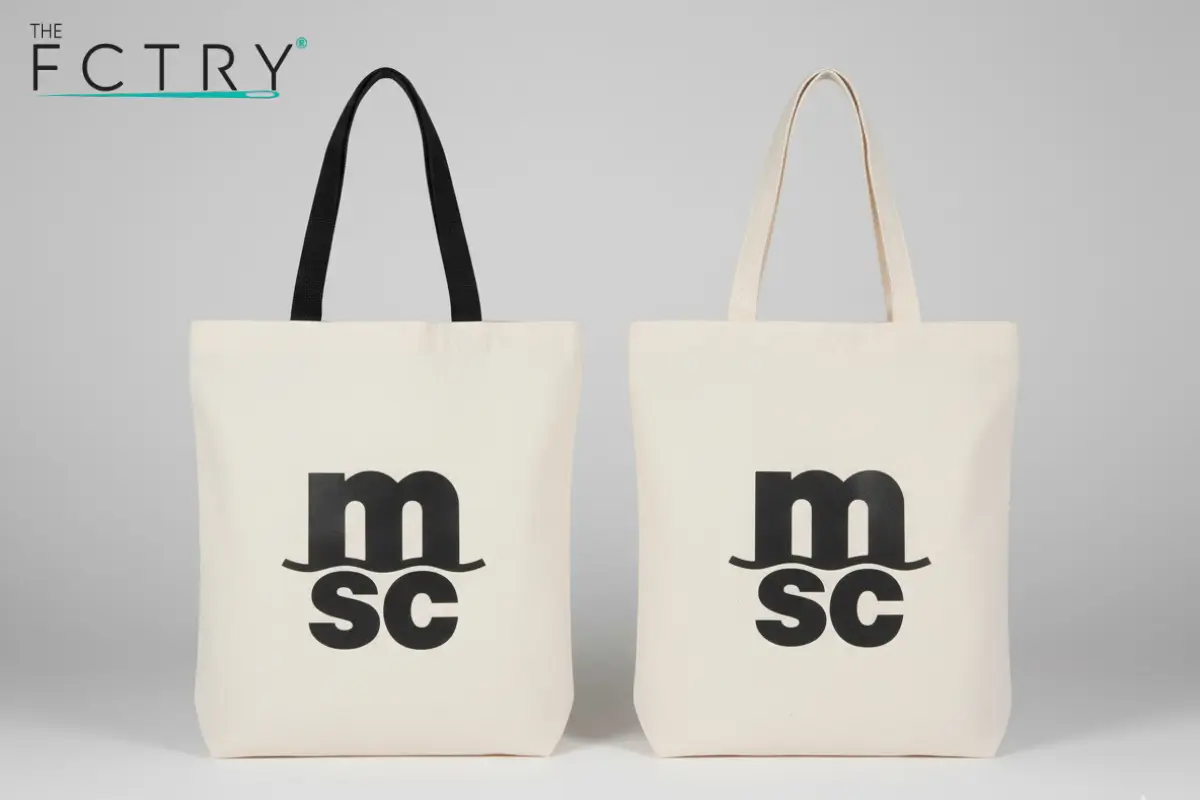
Egypt is hot, dusty, and along the coast it is humid and salty. Material choice is not an aesthetic decision here.
A fabric that performs in a temperate European market can fade, stiffen, or delaminate in a single Egyptian summer.
Bag Materials Comparison
| Material | Durability | Water Resistance | Relative Cost | Best Application |
| 600D Polyester | High | Good with PU coating | Moderate | Standard school bags and backpacks |
| 900D Polyester | Very high | Very good | Moderate-high | Heavy-duty school and travel bags |
| 1680D Ballistic Nylon | Exceptional | Excellent | High | Premium laptop and executive bags |
| Oxford Fabric | Medium-high | Good | Low-moderate | Budget ranges and promotional bags |
| Cotton Canvas | Medium | Low unless treated | Moderate | Lifestyle totes and heritage-styled ranges |
| PU Leather | Medium | Good | Moderate-high | Corporate gifting and laptop portfolios |
| Non-Woven PP | Low | Low | Very low | High-volume promotional and event bags |
| RPET Recycled Polyester | High | Good with coating | Moderate-high | Sustainability-positioned retail ranges |
For the majority of Egyptian school bag programmes, 600D polyester with a PU coating remains the correct commercial balance.
It survives the academic year, accepts sublimation and screen printing cleanly, and keeps the unit price inside retail expectations.
Manufacturing Tiers, Minimum Order Quantities and Pricing Logic
Most manufacturers hide their MOQ behind a contact form. We publish ours, because a wasted enquiry wastes both our time and yours.
Unit cost in bag manufacturing in Egypt is driven by four levers: fabric grade, component count, branding method, and run size.
| Tier | Order Volume | Typical Lead Time | Customization Available | Ideal Client |
| Starter | 300 – 999 units | 25 – 30 days | Logo application, colourway selection, existing patterns | New brands and school pilot orders |
| Growth | 1,000 – 4,999 units | 30 – 40 days | Custom pattern, material selection, bespoke hardware, custom packaging | Regional distributors and retail chains |
| Enterprise | 5,000+ units | 40 – 55 days | Full OEM development, exclusive tooling, dedicated line allocation, export packing | National distributors and exporters |
What Moves Your Unit Price
- Fabric denier and coating specification — the single largest cost component.
- Number of compartments, zippers, and pockets, each of which adds stitching minutes.
- Hardware grade: standard versus branded-equivalent zippers and buckles.
- Branding method: screen printing is economical, embroidery and rubber patches cost more.
- Run size, which spreads pattern, setup, and screen costs across more units.
- Packaging requirements, from bulk polybag to individual retail-ready presentation.
Branding and Customization Options
Private label only works if the branding survives the product. A logo that cracks after two months damages your brand more than no logo at all.
- Silk screen printing — economical, sharp on flat panels, ideal for one to three colours.
- Sublimation printing — full-colour, all-over patterns, works only on polyester.
- Embroidery — premium tactile finish, excellent durability, best for compact logos.
- Woven and printed labels — interior branding, care instructions, and size labelling.
- Moulded rubber and PVC patches — high-impact three-dimensional branding.
- Heat transfer — fine detail and gradients on technical fabrics.
- Custom hardware — branded zipper pullers, buckles, and metal fittings on Enterprise tier.
- Retail-ready packaging — hang tags, polybags, printed cartons, and barcode labelling.
How to Vet Any Private Label Bag Manufacturer in Egypt
Use this checklist with us, and with every competitor you approach. A bag manufacturer confident in its floor will not hesitate at any of these.
- Buyer Checklist
- Ask to visit the production floor. A trading company will find reasons to delay.
- Request the tech pack for your own product before production, not after.
- Insist on a physical first article sample and keep a signed counter-sample.
- Ask for the written AQL standard and the defect-replacement policy.
- Confirm who owns the pattern and tooling if you leave the relationship.
- Request references from clients in your own category and volume band.
- Verify commercial registration, tax card, and any quality certifications by number.
- Get lead time in writing, with a stated start point tied to sample approval.
Serving Distributors Across Egypt — and Exporting Across MENA
The FCTRY produces in Alexandria and distributes nationally. Being close to the port helps our exporters; being close to the Delta helps everyone else.
Our logistics partners deliver to warehouses, retail chains, and school procurement offices across the country.
- Alexandria and Borg El Arab — same-day collection and factory pickup available.
- Cairo, Giza, and 6th of October — scheduled weekly consolidated deliveries.
- Delta governorates: Tanta, Mansoura, Zagazig, Damanhour, Kafr El Sheikh.
- Canal cities: Port Said, Ismailia, and Suez.
- Upper Egypt: Assiut, Sohag, Minya, Qena, Luxor, and Aswan.
- Red Sea and Sinai: Hurghada, Sharm El Sheikh, and Marsa Alam.
- Export via Alexandria Port to Saudi Arabia, the UAE, Kuwait, Qatar, Libya, and Sudan.
For export clients, we prepare commercial invoices, packing lists, and certificates of origin, and we ship on FOB, EXW, or CIF terms.
Alexandria to Jeddah is a matter of days. Shenzhen to Jeddah is a matter of weeks.
Why B2B Buyers Choose The FCTRY
- A real production floor in Alexandria that you are welcome to walk through before you commit.
- Published MOQs and tier pricing, so you know where you stand before the first call.
- Physical sampling in seven to ten working days, with nothing produced before written approval.
- Technical specification in writing: denier, coating, stitch density, hardware grade.
- AQL-based inspection with a stated defect-replacement policy.
- Full private label, white label, OEM, and ODM capability under one roof.
- Domestic pricing in Egyptian pounds with no import duty or customs exposure.
- Export documentation and Alexandria Port access for MENA-bound orders.
Your Next Production Run Starts With One Conversation
Every season, Egyptian wholesalers lose margin to late containers, drifting quality, and suppliers who are three time zones and one language away.
You do not have to source that way. The factory is in Alexandria, the samples are physical, and the lead times are measured in weeks.
Send us a sketch, a photograph, or a competitor sample. We will come back with a tech pack, a tier recommendation, and a price per unit.
Freque
]ntly Asked Questions
What is the minimum order quantity for private label bags in Egypt?
At The FCTRY, private label production starts at 300 units per design and colourway.
Lower quantities are possible on existing patterns with logo-only branding, and volume pricing improves sharply above 1,000 units.
How long does it take to manufacture a bulk school bag order?
Sampling takes seven to ten working days, and bulk production typically runs 25 to 55 days depending on tier and volume.
For the Egyptian back-to-school season, design work should begin no later than February.
Can I put my own brand logo on the bags?
Yes. That is the essence of private label manufacturing, and we apply branding by embroidery, screen printing, sublimation, heat transfer, woven label, or rubber patch.
What is the difference between private label and white label bags?
A white label bag is an existing factory product sold to many buyers with different logos applied.
A private label bag is developed for your brand with your chosen materials and details, and it is not offered to your competitors.
Which fabric is best for school bags in Egypt’s climate?
For most school ranges, 600D polyester with a PU coating offers the strongest balance of durability, water resistance, and price.
Premium ranges move to 900D polyester or ballistic nylon for heavier daily loads.
Can I request a sample before placing a bulk order?
Always, and we recommend it. No order enters our production lines without a signed physical first article sample.
Is manufacturing bags in Egypt cheaper than importing from Asia?
Once you account for import duty, freight, clearance, inland transport, and currency exposure, domestic production is usually competitive and often cheaper.
It is almost always faster, which matters more during a seasonal category like school bags.
Do you supply wholesalers outside Alexandria?
Yes. We deliver to Cairo, Giza, the Delta governorates, the Canal cities, Upper Egypt, and the Red Sea region.
We also export through Alexandria Port to the Gulf, Libya, and Sudan.
What quality control process do you follow?
We run in-line inspection during stitching and an AQL-based sampling inspection on finished goods before packing.
Defective units identified at pre-shipment inspection are replaced under our written policy.
Can you manufacture products other than school bags?
Yes. Our range covers backpacks, laptop bags, totes, duffel bags, drawstring bags, pencil cases, lunch bags, and corporate gifting ranges.